COMING TO TV: “THE MOUNTAINS”
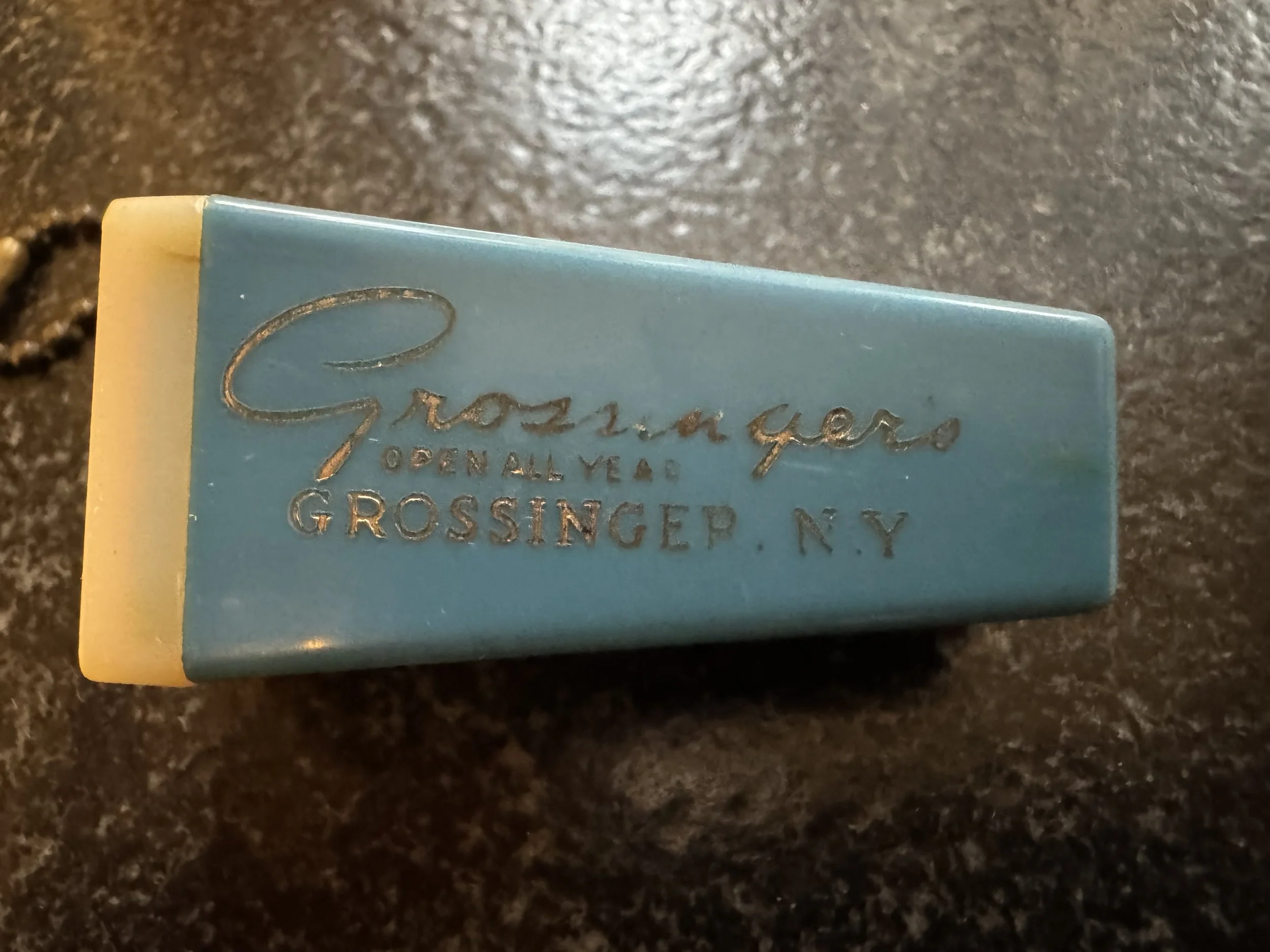
A request on my website read, "Sharon, could you write an article about our new series?" The request came from Harris Salomon. My flippant reply was, “I thought you would never ask.” I felt like following that line with, “Are you kidding me? Of course, I’ll write an article about ‘The Mountains.’”
To read my published article, “‘The Mountains,’ a Scripted Series Based on Grossinger’s Hotel, to Begin Streaming in 2026” in The Jewish Link, dated November 13, 2025, click on the link: https://jewishlink.news/the-mountains-a-scripted-series-based-on-grossingers-hotel-to-begin-streaming-in-2026/ or read it here without the pictures:
“‘The Mountains,’ a Scripted Series Based on Grossinger’s Hotel, to Begin Streaming in 2026
“‘The Mountains,’ a Harris Salomon and Alan Zweibel 2026 TV series.
“‘The Mountains,’ created and produced by Harris Salomon and Alan Zweibel, is poised to be ‘a fun and entertaining scripted television series that will make people fall in love with the Catskills and Jewish people,’ said Salomon, president/owner, Atlantic Overseas Pictures Television.
“Now in pre-production, the fictional series based on Grossinger’s, the iconic Catskills resort in the heart of the ‘Borscht Belt’ in Liberty, New York, highlights the transformative impact the Catskills resorts had on the country post-World War II. The 1940s and 1950s marked the beginning of Jewish culture becoming mainstream in America. In the series, the richness of that time period is built around two women who transformed their family boarding house into ‘the Waldorf of the Catskills: Jennie Grossinger and her daughter, Elaine.’
“Before WWII, with longer work hours, people rarely took vacations. Formerly not accepted in many places, Jewish guests at Grossinger’s kept their traditions and culture. By serving only kosher food, Grossinger’s allowed guests of all denominations of Judaism to sit together at a table and break bread. ‘Newly arrived immigrants saw the food and thought they had died and had gone to heaven,’ said Salomon. ‘They felt safe and thought of it as a new beginning. After a week at Grossinger’s, they came home refreshed.’
“In 1950, you weren’t able to cruise; you would go to the Catskills and have a blast. ‘Jews are progressive; they’re ahead of the curve. Look no further than Grossinger’s in the ’40s and ’50s,’ Salomon observed. ‘Notable American Women’ listed Jennie Grossinger as ‘The best-known hotelkeeper in America.’ In the Catskills, she was dubbed ‘The Ambassador.’
“With its own airport and post office, along with a golf course, riding stables, tennis courts, a skating rink, indoor and outdoor swimming pools, Grossinger’s introduced the first imitation snow in the United States on its ski slopes. Those were daytime activities, aside from the hotel tummlers providing entertainment with games such as ‘Simon Says.’
The series about the Catskills and its predominantly Jewish entertainment and drama wouldn’t be complete without comedians. ‘Modern comedy was formed in the Catskills resorts,’ Salomon said. ‘There’s something inherently funny about Jewish people. Jewish humor is self-deprecating even to this day.’ Greats, such as Milton Berle, got their start performing on Saturday nights in the Catskills, and on Monday, they went on television with the same humor.
“Grossinger’s was renowned for singles’ weekends and the wait staff finding their first loves. Jennie Grossinger, who opened Grossinger’s doors to sports figures, politicians and dignitaries, offered a free honeymoon to couples who met at the hotel.
“Four years ago, after Atlantic Overseas Pictures Television, ‘The Mountains’ producer, obtained the rights to the Grossinger’s story from Elaine Grossinger’s son, Mitchell, Salomon connected with Alan Zweibel, an original writer for ‘Saturday Night Live,’ who got his start writing jokes for Catskills comedians. Salomon and Zweibel aim to recreate the lost world of the 1950s Catskills with dramatic comedy.
“Salomon developed the series, he said, ‘with Zweibel as a gadfly; he’s like a fly on the wall.’ Salomon sees it as ‘a celebration of that time period,’ adding: ‘History is like a mosaic. That’s what makes it so interesting.’
“He continued: ‘It’s a lost world. We knew the difference between right and wrong. There’s a longing for that today by Jewish and non-Jewish people.’
“‘Storytelling,’ Salomon professed, ‘is the key to a great series. Great storytelling transcends a place and time.’ The story is told through Zweibel, who spent childhood summers vacationing at Grossinger’s. An actor portraying Zweibel, the storyteller, parallels his life and the many thousands of guests who came to the Catskills and changed Jewish New York and the country in the postwar period.
“The storyteller returns yearly to that vanished world and tells the tale of the resort as a young man, a middle-aged man, and an older man, while encapsulating the relationship between the mother-daughter team of mavens. Jennie, the quintessential Jewish mother, was warm and welcoming. Salomon credited Jennie for transforming American culture with a strong imprint on Jewish culture.
“Milton Blackstone assisted with Grossinger’s public relations in the 1950s and 1960s. According to Salomon, Blackstone, as Jennie’s publicity agent, worked with her to make Grossinger’s iconic. Jennie was featured on a 1954 episode of the famed television show ‘This Is Your Life,’ affording her ‘a pretty special legacy that lives on to this day,’ according to Salomon.
“The way Grossinger’s looked inside and out was captured in professional art brochures. ‘The iconic ’50s midcentury modern look was a technicolor kind of look that was almost futuristic,’ Salomon said. People dressed much more glamorously than today. No one wore jeans. The men wore suits. In the evening, women wore their finest gowns and were bedecked with jewels and furs.
“Many believe their childhood summers spent vacationing at Catskills resorts shaped their lives, according to Salomon. They have a soft spot in their hearts for the Catskills, and they trace their roots back to learning about life in these places.
“‘There was a richness to that time period that deserves to be told,’ said Salomon. ‘It shaped who we are today as Jews and as a people with a profound impact on the world through comedy. ‘The Mountains’ is a celebration of that time period that touches on antisemitism, but focuses on the fun, beauty and enjoyment of that time. It’s the right time … in this country to show how special Jewish people are.’
“Look for an announcement around the first of the year revealing which streaming channel will broadcast ‘The Mountains.’ Viewership is expected to range from under age 40 to older folks. Asked if there will be a surprise ending to ‘The Mountains,’ Salomon chuckled, ‘Hope so.’
“A companion documentary, ‘We Met at Grossinger’s,’ created by Salomon, will be shown at the IFC Center in New York City on Thursday, Nov. 13 at 6:30 p.m.; Sunday, Nov. 16 and Wednesday, Nov. 19. The documentary covers the rise of Grossinger’s from a modest boarding house to a family dynasty.
“The documentary is directed by Paula Eiselt and produced by Atlantic Overseas Pictures Television and Bungalow Media and Entertainment. Salomon and Robert Friedman are executive producers. Friedman and Eiselt are not connected to the television series. The Grossinger’s story rights are owned by Atlantic Overseas Pictures Television.
“After Jennie died in 1972, her children ran Grossinger’s until closing its doors in 1986. The ultimate decline of the resort hotels and bungalows of the Borscht Belt includes the three A’s: Air travel, Air conditioning and Assimilation.”
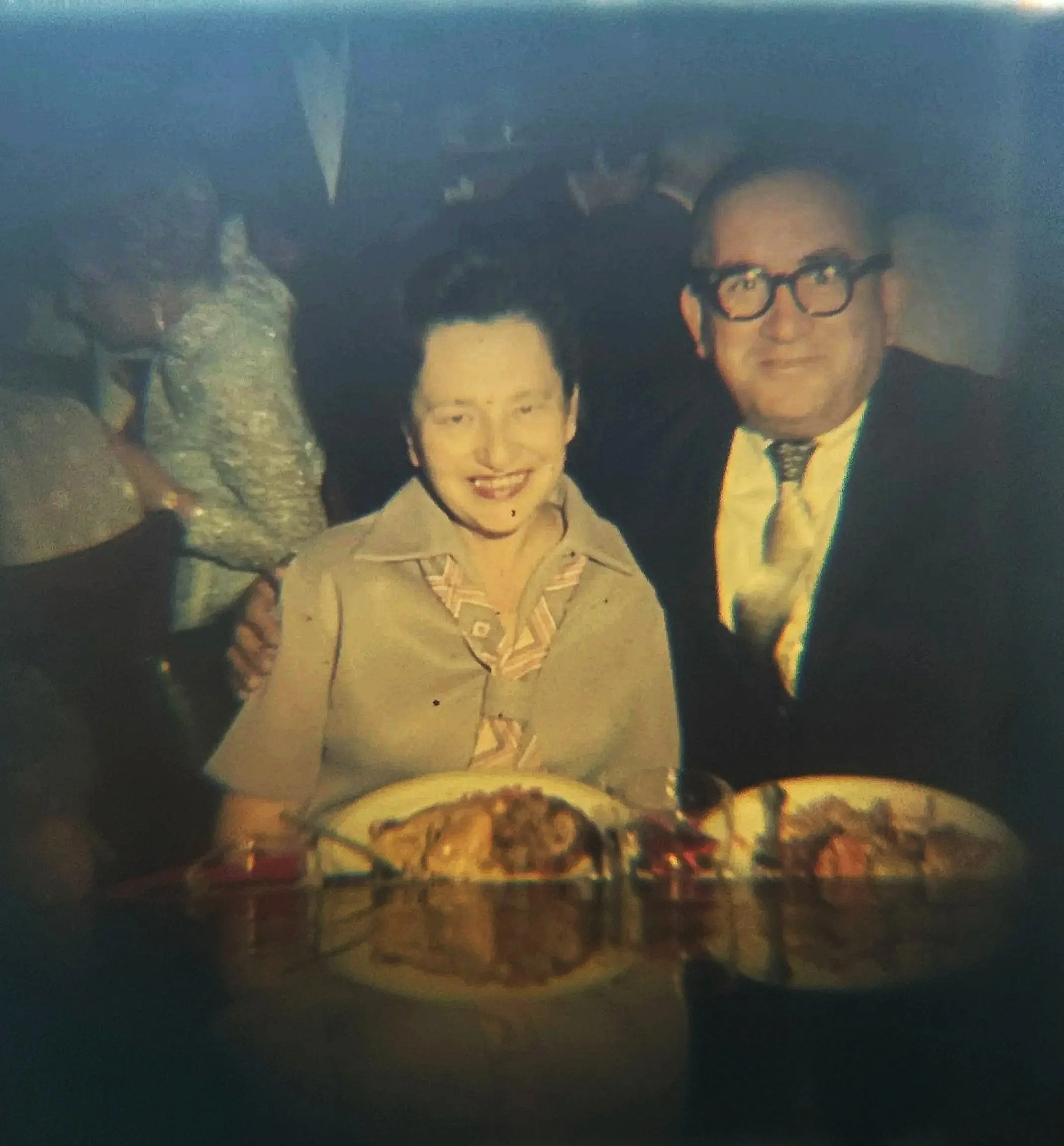
A peek inside the Grossinger’s keychain photo viewer shows my parents, Ida and Benjamin Mark, 1970, in celebration of their 30th wedding anniversary, enjoying a bountiful meal in the famous Grossinger’s Resort dining hall